


Join us for Wild Horse Wednesdays®, Wednesday, May 9, 2018
More
May 9, 2018
animal cruelty, animal welfare, BLM corruption, Wild Horse & Burro Radio BLM, Bureau of Land Management, Carol Walker, congress, Equine Advocates, Susan Wagner, Wild Burros, Wild Horse Freedom Federation, wild horses 7 Comments
Join us for Wild Horse Wednesdays®, Wednesday, May 9, 2018
More
March 22, 2018
Government BLM, Bureau of Land Management, Department of the Interior, PEER, propaganda, Public Employees for Environmental Responsibility, Ryan Zinke, Vision Cards 2 Comments
Source: Public Employees for Environmental Responsibility
New Uniform “Vision Cards” Display Images of Oil Rig and Livestock Grazing
Washington, DC — U.S. Bureau of Land Management employees are now under orders to wear “Vision Cards” on their uniforms displaying official maxims, according to Public Employees for Environmental Responsibility (PEER). These cards are little message boards with aphoristic statements about vision, mission, values, and guiding principles of the BLM.


“The person of federal employees should not be used for political messaging,” stated PEER Executive Director Jeff Ruch, noting the Vison Cards’ similarity to propaganda placards used by totalitarian regimes. “This is supposed to be the Bureau of Land Management not Mao’s Red Guard.”
The two Vision Cards for uniform wear repeat language from the agency website. The cards –
It is not clear from where the order to wear the Vison Cards emanates. BLM has no permanent director nor has the Trump White House even named a nominee. During the past year, Interior Secretary Ryan Zinke and a small band of political appointees in DC have dictated BLM policy. While reports of the mandatory card display have reached PEER from the West, the organization is still trying to determine whether the order is national in scope.
Read the rest of this news release HERE.
March 20, 2018
WATER BLM, environment, Environmental Working Group, Grand Canyon, mining, Supreme Court, uranium mines, water Leave a comment
Source: Environmental Working Group (EWG)

WASHINGTON – If the Supreme Court lifts the moratorium on uranium mining near the Grand Canyon, the expected surge in active claims would endanger not only a cherished national landmark, but also the drinking water for 40 million Americans, according to the Environmental Working Group and Earthworks.
Between the current leanings of the Supreme Court and the Trump administration being in power, the mining industry clearly sees an opportunity to open up uranium extraction along the canyon rim for the first time in a decade. There are currently fewer than 900 active uranium claims near the canyon, compared to almost 3,500 before the ban.
In November the Trump administration announced plans to reconsider the ban on uranium mining as part of its agenda to prop up dirty and dangerous domestic energy sources.
Last week two mining industry lobbying groups petitioned the Supreme Court to overturn the 20-year moratorium for uranium mining on more than 1 million acres of land along the canyon rim, put in place in 2012 by then-Secretary of the Interior Ken Salazar. The mining groups are seeking reversal of the Ninth Circuit Court of Appeals’ December ruling to leave the ban in place.
“If the Supreme Court decides in favor of the uranium industry, it could permanently scar a sacred landscape that is the jewel in the crown of America’s natural heritage, and threaten the drinking water of 40 million Americans from Los Angeles to Las Vegas,” said EWG President Ken Cook. “President Trump has shown total disregard for preserving natural resources and protecting public health, and if the court overturns the ban, the Grand Canyon could soon fall victim to his radical agenda.” More
March 18, 2018
animal cruelty, animal welfare, wild horses and burros BLM, Department of the Interior, Equine Advocates, Ryan Zinke, Wild Burros, Wild Free Roaming Horses and Burros Act of 1971, Wild Horse Freedom Federation, wild horses Leave a comment

photo: Carol Walker
“To destroy them so that oil, gas, livestock, hunting and mining interests can deplete the land without any horses or burros standing in the way is bad for the environment and frankly, un-American.”
Source: Salon.com
Activists: Government plan to kill wild horses is all a profit scheme
Trump’s Interior Secretary has some ugly plans for America’s wild animals
by
Interior Secretary Ryan Zinke has raised red flags for a number of reasons during his short tenure. He seems to care less about protecting America’s national monuments than allowing them to be exploited by special interest groups and has been caught up in one corruption scandal after another. You would think that it’d be difficult for a man like that to do anything else that could make people who don’t bleed money-green to despise him.
Unfortunately, the lives of 50,000 wild horses and burros are in Zinke’s hands, because Congress is preparing to negotiate appropriations for the Interior Department and whether to allow for the unlimited slaughter of wild horses and burros.
It all stems back to the Wild Free Roaming Horses and Burros Act of 1971 a bill that offered protections to the horses and burros that roam the United States — and, of course, was immediately opposed by special interests in Big Agriculture who were determined to erode its protections. The interests’ first major success in doing so occurred in 2004 after Sen. Conrad Burns, R-Mont., attached a provision to an omnibus bill that removed most of the legal protections established in 1971 and privatized the animals themselves.
That’s where Zinke comes into play. In 2009, the Montana State House introduce a bill to build a horse slaughterhouse in the state at a time the country had been two years without one.
“Zinke wanted to bring slaughter back so ranchers and others in the horse business could dispose of their unwanted, unhealthy or inconvenient horses quickly and for a profit,” Susan Wagner of Equine Advocates and Debbie Coffey of Wild Horse Freedom Federation told Salon by email. “The [Montana] bill did not pass but fast forward to today, and now all these animals are facing extinction. The Interior Department’s budget being slashed by more than $1 billion also doesn’t help.”
READ THE REST OF THIS ARTICLE HERE.
March 8, 2018
animal cruelty, animal welfare, Uncategorized, wild horses and burros BLM, horse slaughter, Wild Burros, wild horses Leave a comment
Source: wildhoofbeats.com
by Carol J. Walker, Dir. of Field Documentation for Wild Horse Freedom Federation
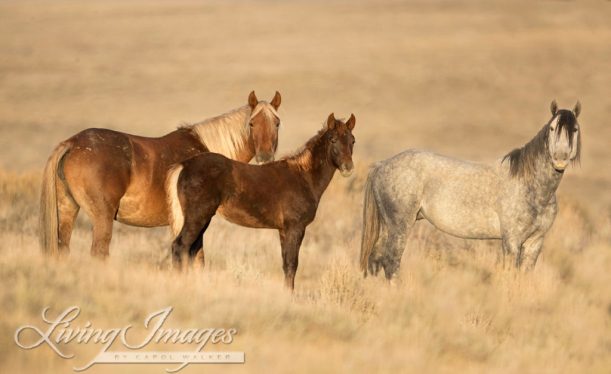
Wild Family in Salt Wells Creek before being rounded up
Right now, Congress is working on the 2018 Spending Bill that will determine the fate of wild horses and burros in the United States. This wild horse family above which was rounded up in October in addition to the 45,000 other wild horses currently held in holding facilities imminently face possible killing or slaughter.
Your Representatives and Senators, who are supposed to be representing you, need to hear from you right now to make sure that wild horses and burros remain protected from killing and slaughter once the spending bill is voted upon and becomes final.
Please call your Senators and Representatives and tell them:
“Please work with leadership in Congress to make sure that the final 2018 spending bill protects America’s wild horses and burros from mass killing and slaughter. Please protect wild horses and burros and work to humanely manage them on our public lands. Please do not allow horse slaughter plants to be opened in the United States.”
Contact Your Senators:
https://www.senate.gov/senators/contact/
Contact Your Representatives:
https://house.gov/representatives/find/
Thank you.
Carol Walker
To find out more about Wild Horse Freedom Federation and our work to keep wild horses and burros wild and free on our public lands visit www.WildHorseFreedomFederation.org
February 20, 2018
Animal Welfare, FARMING & FOOD, Food Safety, Toxic food, Wild Horse & Burro Radio, wild horses and burros animal welfare, BLM, BLM corruption, Dr. Ann Marini, drugs, food safety, horse slaughter, Marti Oakley, TS Radio, Wild Burros, wild Horse & Burro Radio, Wild Horse Freedom Federation, wild horses Leave a comment
Join us for Wild Horse Wednesdays®, this Wednesday, Feb. 21, 2018 More
February 16, 2018
corruption, Government BLM, Bureau of Land Management, FOIA, free press, Freedom of Information Act, Government Accountability, Secretary of the Interior Ryan Zinke 1 Comment
If the BLM would raise the livestock grazing fees, even just a little bit, they’d have plenty of money to be transparent. Also, there is little that can possibly “slow down the agency’s decision-making process” since it remains in the dark ages.
Source: muckrock.com
“Media requests only make up a fraction of the total requests agencies receive, but the new policy setting an organizational “cap” on requests could severely hamper the work of journalists – and concerned citizens – trying to use FOIA for its intended purpose.”
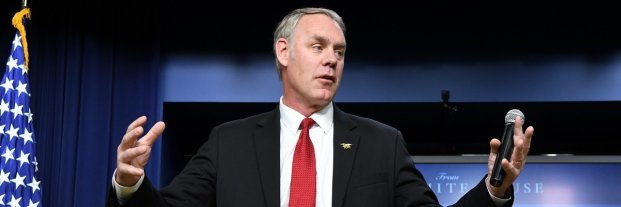
Recommendations appear to target media requests, and raise the cost of already prohibitive processing fees
According to records obtained by the Washington Post, the Bureau of Land Management is recommending new legislation that would limit the number of FOIA requests individuals and agencies could file with the agency, create stricter criteria for fee waivers, as well as increased fees for “search and redaction.”

For justification, BLM cites the agency’s limited resources, which in turn causes requests to “slow down the agency’s decision-making process.” In Financial Year 2016, the report states, the agency’s FOIA work cost $2.8 million, which was approximately .2 percent of the agency’s total budget of $1.3 billion that year.
As has been written about before, the vast majority of FOIA requests are by commercial entities. For some agencies, the percentage of commercial requests are as high as 95 percent.
READ THE REST OF THIS ARTICLE HERE.
February 12, 2018
Government agency leaders, BLM, Bureau of Land managment, Department of the Interior, DoI, FWS, Interior’s Office of Inspector General, National Park Service, NPS, PEER, Persident Trump, U.S. Fish & Wildlife Service 6 Comments

Brian Steed, Bureau of Land Management’s Acting Director
“Federal agencies are not supposed to be run like a temp service.” – PEER Executive Director Jeff Ruch
Source: Public Employees for Environmental Responsibility (PEER)
For Immediate Release: Feb 12, 2018
Contact: Kirsten Stade (202) 265-7337
All Decisions by Acting Park Service, BLM, and Fish & Wildlife Heads Legally Void
Posted on Feb 12, 2018
Washington, DC — President Trump’s record tardiness in nominating agency leaders may undo months of work inside the Department of Interior, according to a complaint filed today by Public Employees for Environmental Responsibility (PEER). The way the Trump administration has filled agency leadership slots with temporary or acting directors violates a law enacted to prevent a president from circumventing the U.S. Senate’s constitutional advice and consent power.
The PEER complaint filed with Interior’s Office of Inspector General charges that the acting directors of the National Park Service (NPS), Bureau of Land Management (BLM), and U.S. Fish & Wildlife Service (FWS) are in blatant violation of the Federal Vacancies Reform Act. Under that act, any action taken by a noncompliant official “shall have no force or effect” nor may it be later “ratified.”
“The law prevents a president from installing acting directors for long periods and completely bypassing Senate confirmation,” argued PEER Executive Director Jeff Ruch, noting that President Trump has not nominated or even announced an intention to nominate, persons to fil the NPS, BLM, or FWS vacancies.
“Federal agencies are not supposed to be run like a temp service.”
The complaint recounts Vacancies Reform Act violations invalidating the appointments of –
Read the rest of this press release HERE.
January 16, 2018
animal welfare, BLM corruption, Wild Horse & Burro Radio, Wild horse slaughter Axtell, BLM, Carol Walker, horse slaughter, wild Horse & Burro Radio, Wild Horse Freedom Federation, wild horses Leave a comment
Join us for Wild Horse Wednesdays®, on Wednesday, Jan. 17, 2018 More
January 8, 2018
Government, land theft Aden Seidlitz, BLM, Brian Steed, Bureau of Land Management, Ed Roberson, Greg Shoop, Jamie Connell, Jerome E. Perez, John Ruhs, Jon Raby, Karen Mouritsen, Mary Jo Rugwell, Michael D. Nedd, Mitch Leverette, Peter Ditton, Raymond Suazo Leave a comment
Since the BLM has removed state websites and staff directories from the internet, and they now have only one portal for very limited public information, we thought we’d give you a quick update on who’s running the Bureau of Land Management at national and state levels. Source: BLM
 Brian Steed
Deputy Director, Programs and Policy, Bureau of Land Management
Exercising Authority of the Director
Brian Steed is the BLM’s Deputy Director for Programs and Policy, exercising authority of the director. Before joining the BLM in October 2017, Steed served as Chief of Staff for Representative Chris Stewart of Utah. Before that, he taught economics at Utah State University and was once a deputy county attorney in Iron County, Utah. Read the full biography
 Michael D. Nedd
December 27, 2017
animal cruelty, animal welfare, BLM corruption, Uncategorized, wild horses and burros BLM, euthanasia, Marybeth Devlin, Rep. Chris Stewart, slaughter, Wild Burros, wild horses 3 Comments
Rep. Chris Stewart of Utah deceived Congress by implying there was a 41% increase in wild horse & burro population in only 5 months, and by showing a photo of one thin horse and claiming that a majority of the wild horse population on the range were starving or dying from dehydration.
Stewart authored the recent Amendment in the House that would lead to 46,000 healthy wild horses & burros in BLM holding facilities and tens of thousands more on public lands being “euthanized” (killed).
Now Stewart has stooped to spreading false information about wild horses in an OpEd that appeared to in the New York Times titled “The Hard Truth About the West’s Wild Horse Problem.” Stewart continues to push for the killing of healthy wild horses & burros, both in his OpEd and in Congress.
Researcher Marybeth Devlin submitted her remarks (below) countering Stewart’s OpEd to the New York Times via its “we want to hear from you” page. However, when I clicked on the link to the “we want to hear from you” page, it was gone (so apparently, the New York Times doesn’t want to hear from anyone). Marybeth also commented on The New York Times Opinion Section on Facebook, where Stewart’s piece is listed (among others, halfway down the page).
Our thanks to Marybeth Devlin for exposing the misinformation opined by this squirrelly politician (my apologies to squirrels). Stewart’s own constituents even booed him in Salt Lake City this year.
“No birth control, no euthanasia, no slaughter: None of them fixes fraud. The problem is fraud – BLM’s fraud – not overpopulation. What is needed is honest management of our wild horses and burros.” – Marybeth Devlin
by Marybeth Devlin
The Bureau of Land Management’s wild-horse fraud: The “overpopulation” of wild horses is a pernicious lie, a concocted “crisis”. The government doesn’t have a wild-horse problem — wild horses have a government problem. More
December 22, 2017
BLM corruption, Wild horse slaughter, wild horses and burros BLM, Caliente Herd Area COmplex, Ely District, horse slaughter, NEVADA, wild horses Leave a comment

Please be sure to mail or email your written comments to:
Bureau of Land Management Ely District Office
Attention: Ben Noyes, Wild Horse and Burro Specialist
702 N. Industrial Way
Ely, NV 89301
Comments can also be submitted electronically at blm_nv_eydo_caliente_complex_ea@blm.gov.
E-mail messages should include “Caliente Herd Area Complex Wild Horse Gather” in the subject line.
November 14, 2017
wild horses and burros BLM, Ladd drummond, Pioneer Woman, Ree Drummond, wild horses Leave a comment
Not only has the Bureau of Land Management paid Drummond Land and Cattle Co. almost $24 million to warehouse our wild horses on their long term holding pasture, but Pioneer Woman Ree Drummond has used photos of wild horses on most of her Pioneer Woman product packaging and on her blog and has used video of wild horses in the trailer for her Pioneer Woman cooking show. – Debbie
Source: dailymail.co.uk

Land barons: In its annual list of America’s 100 largest landowners, The Land Report reveals that as of 2016 the Drummond Family owns an astonishing 433,000 acres of property
Ree Drummond may present herself as a modern day Laura Ingalls Wilder or Willa Cather on her Pioneer Woman blog and TV show, but the self-made entrepreneur has far more in common with the Queen of England than her prairie home companions.
In its annual list of America’s 100 largest landowners, The Land Report reveals that as of 2016 the Drummond Family owns an astonishing 433,000 acres of property.
Drummond, her husband Ladd and their four teenage children make their home just two hours down the road from Oklahoma City in Pawhuska, which is where her husband Ladd’s family put down roots four generations ago.
Ladd is now a key player at Drummond Land & Cattle Co, the notoriously private family-held company that Frederick Drummond started after arriving in this country from Scotland in the late 19th century.
In addition to the money they bring in from their cattle and horse endeavors, Drummond Land also manages to clean up thanks to one deep-pocketed tenant – the US government.

In addition to the money they bring in from their cattle and horse endeavors, Drummond Land also manages to clean up thanks to the US government
November 8, 2017
animal welfare, Food Safety, Wild Horse & Burro Radio BLM, Dr. Ann Marini, drugs, food safety, horse slaughter, Wild Burros, wild horses Leave a comment
November 5, 2017
BLM corruption, Forestry Service, WATER, wildlife BLM, livestock grazing, public lands, water, welfare ranching, wildlife 2 Comments
by Debbie Coffey
In my opinion…
We need to find a fix for the unhealthy populations of non-native, domestic cattle and sheep on public lands.
Imagine a proposal to introduce privately owned livestock onto the public lands of the American West. The owners of the privately owned livestock would successfully gain use of 229 million acres of public lands in the West. The livestock would be owned by a politically powerful industry that attracted a passionate following — people who love using public lands for their private profit so much that they influence the federal management of their privately owned animals so that they would rarely, if ever, be restricted by law. Some of them would be so passionate that they would take over and occupy government buildings for 41 days, and end up costing taxpayers at least $9 million, including $2.3 million on federal law enforcement and $1.7 million to replace damaged or stolen property.
The downside of these privately owned livestock would be that they destroy native vegetation, damage soils and stream banks, and contaminate waterways with fecal waste. After decades of livestock grazing, once-lush streams and riparian forests have been reduced to flat, dry wastelands; once-rich topsoil has been turned to dust, causing soil erosion, stream sedimentation and wholesale elimination of some aquatic habitats; overgrazing of native fire-carrying grasses has starved some western forests of fire, making them overly dense and prone to unnaturally severe fires. Not to mention that predators like the grizzly and Mexican gray wolf were driven extinct in southwestern ecosystems by “predator control” programs designed to protect the livestock industry. More
November 1, 2017
BLM corruption, Debbie Coffey, FARMING & FOOD, Wild Horse & Burro Radio, Wild Horse & Burro Radio, wild horses and burros, wildlife BLM, Earth Island Institute, environment, Forest Service, George Wuerthner, livestock industry, public lands, Public Lands Media, welfare ranching 2 Comments
Join us for Wild Horse Wednesdays®, this Wednesday, Nov. 1, 2017 More
October 29, 2017
BLM corruption, FARMING & FOOD, WATER BLM, Christopher Ketcham, drought, Foundation for Deep Ecology, George Wuerthner, Jon Marvel, livestock grazing, public lands, regulatory capture, water, Western Watersheds Project Leave a comment
Source: New Republic
“Every stream on public lands grazed by livestock is polluted and shows a huge surge in E. coli bacterial contamination during the grazing season,” says Marvel. “No wonder we can’t drink the water.”
Marvel, who retired from WWP last year, spent two decades haranguing and suing the U.S. Forest Service and U.S. Bureau of Land Management, the government bodies that are supposed to regulate ranching on the public domain. “Forest Service and BLM staffers see their job as the protection and enabling of ranchers. They are the epitome of what is meant by agency capture.”

by Christopher Ketcham More
October 17, 2017
animal cruelty, animal welfare, BLM corruption, Wild Horse & Burro Radio animal cruelty, BLM, Bureau of Land Management, Carol Walker, Ginger Kathrens, National Wild Horse & Burro Advisory Board, The Cloud Foundation, Wild Burros, wild Horse & Burro Radio, Wild Horse Freedom Federation, wild horses Leave a comment
October 11, 2017
animal cruelty, animal welfare, BLM corruption, Wild Horse & Burro Radio BLM, Carol Walker, roundups, wild Horse & Burro Radio, Wild Horse Freedom Federation, wild horses, Wyoming 1 Comment
Join us on Wild Horse Wednesdays®, this Wednesday, Oct. 11, 2017 More
September 30, 2017
animal cruelty, BLM corruption, Uncategorized, Wild Horse & Burro Radio animal cruelty, BLM, Bureau of Land managment, Carol Walker, public lands, ROck SPrings Grazing Association, roundups, wild Horse & Burro Radio, Wild Horse Freedom Federation, wild horses 1 Comment
Join us for a special extra show this Sunday, Oct. 1, 2017
6:00 p.m. PST … 7:00 p.m. MST … 8:00 p.m. CST … 9:00 p.m. EST
You can also listen to the show on your phone by calling (917) 388-4520.
You can call in with questions during the 2nd half hour, by dialing (917) 388-4520, then pressing 1.
This show will be archived so you can listen to it anytime.

This is a wild family in Salt Wells Creek that has no idea what is going to happen to them.
Our guest tonight is Carol Walker, Dir. of Field Documentation for Wild Horse Freedom Federation. Carol has been at the Bureau of Land Management’s roundups of wild horses in the Checkerboard area of Wyoming. This roundup will result in the devastation of the three largest remaining herds in Wyoming.
Carol has an important update for the public. The BLM is not giving the public accurate numbers in reports.
Carol’s website is http://www.wildhoofbeats.com/ and you can see her photography of wild horses at http://www.livingimagescjw.com/
To contact us: ppj1@hush.com
TO LISTEN TO ALL ARCHIVED WILD HORSE & BURRO RADIO SHOWS, CLICK HERE. More
September 12, 2017
animal cruelty, animal welfare, corruption, Wild Horse & Burro Radio, Wild horse slaughter, wild horses and burros BLM, Bureau of Land Management, Equine Welfare Alliance, horse slaughter, John Holland, Salt River wild horse Management Group, Simone Netherlands, Wild Burros, wild Horse & Burro Radio, Wild Horse Freedom Federation, wild horses Leave a comment
August 29, 2017
animal cruelty, animal welfare, Animal Welfare, BLM corruption, Uncategorized, Wild Horse & Burro Radio, Wild horse slaughter BLM, Ginger Kathrens, horse slaughter, National Horse and Burro Rangeland Management Coalition, The Cloud Foundation, Wild Burros, wild Horse & Burro Radio, Wild Horse Freedom Federation, wild horses Leave a comment
Join us on Wild Horse Wednesdays®, this Wednesday, August 30, 2017 More
August 28, 2017
Government, Uncategorized, wild horses and burros Allen D. Freemyer, American Mustang, American Mustang Foundation, Andrew J. Lesofski, BLM, horse slaughter, James H. Sadler, LLC, Terry Messmer, The Wildlife Society, Utah State University, Wild Burros, wild horses, Windsor L. Freemyer 4 Comments

Utah State University Wildland Resources Professor Terry Messmer
by Debbie Coffey, V.P. & Dir. of Wild Horse Affairs, Wild Horse Freedom Federation
The National Horse and Burro Rangeland Management Coalition, chaired by The Wildlife Society (TWS), concluded their secretive, closed-to-the-public “Slaughter Summit” co-hosted by the Utah State University and the state of Utah. The organizer of this Summit, Utah State University Wildland Resources Professor Terry Messmer, is heavily associated with The Wildlife Society, an organization that is pushing for the slaughter of wild horses and burros.
In a news article in The Salt Lake Tribune titled “Utah State University hosts wild horse summit, but excludes key advocates and the public,” it states:
“While closed meetings are sometimes considered anathema to scientific debate, Messmer defended the secrecy as a necessary precaution in the face of threats against some of the participants, including filmmaker Ben Masters. Other speakers regarded as anti-horse partisans are Beaver County Commissioner Tammy Pearson and attorney Frank Falen, whose Cheyenne, Wyo., law firm has repeatedly sued the BLM over horse management and other issues on behalf of ranchers.
‘We’ve got over 50 organizations represented, including three leading horse advocate groups that are part of the registration,’ Messmer said. He named the American Mustang Association, the American Mustang Foundation and the Wild Mustang Foundation.” More
August 22, 2017
animal welfare, corruption, Government, Wild Horse & Burro Radio 2018 Budget, BLM, Department of the Interior, Equine Advocates, horse slaughter, National Wild Horse and Burro Management Summit, Susan Wagner, Terri Farley, Wild Burros, wild Horse & Burro Radio, Wild Horse Freedom Federation, wild horses 1 Comment
Join us on Wild Horse Wednesdays®, this Wednesday, August 23, 2017 More
August 15, 2017
Animal Welfare, corruption, Wild Horse & Burro Radio animal welfare, BLM, Bureau of Land Management, Carol Walker, Debby Coffey, Ginger Kathryns, sterilization, The Cloud Fondation, Wild Burros, wild horse & burros, wild horses 2 Comments
Join us on Wild Horse Wednesdays®, this Wednesday, August 16, 2017 More
July 31, 2017
animal laws, Animal Welfare, BLM corruption, Wild horse slaughter 2018 Budget, BLM, Department of the Interior, FOIA, Government Accountability, White Paper, Wild Burros, Wild Horse Freedom Federation, wild horses 1 Comment

photo by Carol Walker
by Debbie Coffey, V.P. and Dir. of Wild Horse Affairs, Wild Horse Freedom Federation
Wild Horse Freedom Federation issued a White Paper that has taken years of research, and offers new evidence on the Bureau of Land Management’s Wild Horse & Burro Program that has never been seen by Congress or the public.
The Secretary of the Department of the Interior, Ryan Zinke, wants to cut the fat from the 2018 Budget by killing up to 46,000 wild horses and burros in BLM holding facilities due to “costs,” and to kill many thousands more on public lands because of a supposed “excess.”
However, Wild Horse Freedom Federation has done on-the-ground investigations of many BLM Long Term Holding facilities, with photos, videos and other evidence, proving that less than half of the horses that the BLM contractors, and the BLM, claimed were on long term holding facilities, were actually there.
One long term holding “pasture” contained a residential development. More
July 7, 2017
Uncategorized ASPCA, BLM, Cory Golden, Department of the Interior, Equine Welfare Alliance, Ginger Kathrens, horse slaughter, John Holland, Katlin Kraska, R.T. Fitch, Return to Freedom, Ryan Zinke, The Cloud Foundation, Wild Horse, Wild Horse Freedom Federation 1 Comment
Join us on Wild Horse Wednesdays®, This is a SPECIAL Saturday show on July 8, 2017 More
July 2, 2017
BLM corruption, Wild horse slaughter, wild horses and burros BLM, Department of the Interior, Ginger Kathrens, horser slaughter, Ryan Zinke, The Cloud Foundation, wild horses and burros 1 Comment

Terry Fitch of Wild Horse Freedom Federation at Palomino Valley
SOURCE: The Cloud Foundation
June 27, 2017
Wild Horse & Burro Radio, Wild Horse & Burro Radio, Wild horse slaughter, wild horses and burros 2018 Federal budget, BLM, Cory Golden, Department of the Interior, Neda DeMayo, Return to Freedom, wild Horse & Burro Radio, Wild Horse Freedom Federation, wild horses 1 Comment
Join us on Wild Horse Wednesdays®, June 28, 2017 More
April 18, 2017
BLM corruption, wild horses and burros animal welfare, BLM, Bureau of Land Management, government transparency, horse slaughter, Tom Davis, wild horses 1 Comment
by Debbie Coffey, V.P. & Dir. of Wild Horse Affairs, Wild Horse Freedom Federation All Rights Reserved. Copyright 2017
On the Bureau of Land Management’s new website, on the Program Data page for the Wild Horse & Burro Program (under the Wild Horse and Burro Sales to Private Care tab), the BLM claims “It has been and remains the policy of the BLM, despite the unrestricted sales authority of the Burns Amendment, NOT to sell or send any wild horses or burros to slaughterhouses or to “kill buyers.”
The BLM claims “Wild Horses and Burros Sold to Good Homes” but then includes a total of 402 wild horses and burros sold in Fiscal Year 2012. (In this 402 total, 320 were horses and 82 were burros.)
BLM sale logs obtained by us in Freedom of Information Act requests indicate that in Fiscal Year 2012, the BLM sold 239 wild horses (almost 80% of the 320 horses that were sold) to kill buyer Tom Davis of La Jara, CO. Many, if not all, of these wild horses went to slaughter in Mexico.
Does this look like a “good home” to you?
BLM states it has a policy not to sell wild horses and burros to kill buyers, but: More
April 15, 2017
Uncategorized BLM, Bureau of Land Management, censorship, government transparency, Wild Burros, wild horses 4 Comments
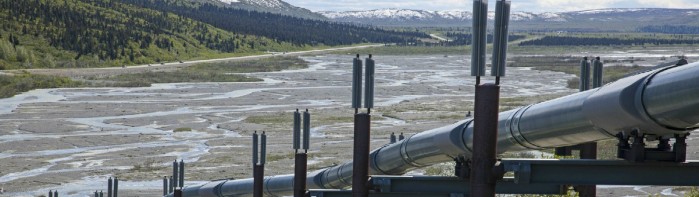
After NBC News wrote about the Bureau of Land Management featuring a photo of a coal bed at the top of their website, the BLM changed it… to now feature this photo of an oil & gas pipeline.
by Debbie Coffey, V.P. & Dir. of Wild Horse Affairs, Wild Horse Freedom Federation All Rights Reserved. Copyright 2017
The Bureau of Land Management is scrubbing most of its links off of the internet, and in doing so, erasing much of its history from public view.
Many of the blm.gov links that are still remaining on the internet at this point say “page not found,” or the links are no longer cached.
The BLM also suddenly removed state and district websites. Instead, you will now find “landing pages” that direct you to only one main Bureau of Land Management website. (You can look at the new BLM website HERE.)
I called a BLM Public Affairs Specialist to ask some questions about the defunct websites and links. This person said in the past there were about 90,000 pages (and then a bit later stated that it could possibly be only about 60,000 pages) of BLM content on the internet, but that all of these pages couldn’t be maintained or updated, and weren’t centralized. This person said the BLM’s prior content management system was outdated.
Most importantly, this person also said there were now standards to reduce the amount (of pages/content). More
April 11, 2017
animal welfare, BLM corruption, WATER BLM, John Ruhs, NEVADA, wild horses & burros 6 Comments
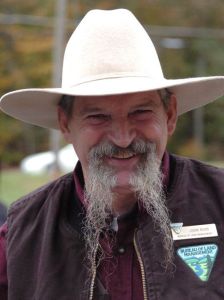 John Ruhs, BLM Nevada State Director

Yosemite Sam, Ruhs’ doppelganger
Dadgummit! After John Ruhs, Nevada’s BLM State Director, said that he wanted to round up 4,000 wild horses in Elko County last summer (supposedly in response to the continued lies blaming wild horses and burros for the “deterioration of drought-stricken rangeland”), we’re noting that many mines that will use billions of gallons of water are now on the verge of expanding in Nevada.
Ruhs recently spoke at the Elko Convention Center, and stated that “We are pretty proud of the fact that this last year we have worked with the Nevada Cattlemen’s Association, the Nevada Department of Agriculture, the Forest Service, Fish and Wildlife Service and NDOW to provide some public opportunities to talk about sage grouse land use amendments and what they mean to the grazing program. A lot of work still needs to be done.”
The BLM ALWAYS works with the Nevada Cattlemen’s Association. And the National Cattlemen’s Association. Actually, the BLM works FOR them. Notice that the focus of talking about sage grouse land use amendments is all about what they mean to the grazing program?
Ruhs also lamented that wild horse and burro issues dominate a large part of the Nevada BLM and Ruhs went on to talk about the difficulties in wild horse management.
Wild horse and burro issues dominate? Like, bigger than all of the mines and outnumbering all of the livestock?
And talk about difficulties? How about all those abandoned mines in Nevada, John?
And management? There is only wild horse and burro “MISmanagement.”
Ruhs then said “We are somewhere in excess of 37,000 horses on the rangeland that is a big priority for us and it’s one of the things that I hope in the new administration that we will see some changes that will finally allow us to get some work done on the ground.”
We hope that the work that Ruhs is referring to getting done “on the ground” will include getting an accurate count of the wild horses and burros, rescinding some livestock overgrazing permits and making sure the extractive industries don’t use every last drop of water.
Why even bother to imply that the BLM “manages” anything, except impending environmental damage from the “multiple uses” that make a buck? Don’t stash the truth, John.
April 5, 2017
Debbie Coffey, environmental pollution BLM, drought, environment, Fish Creek HMA, Gold Bar Mine, McEwen Mining Inc., NEVADA, Roberts Mountain HMA, water, Whistler Mountain HMA, Wild Horse Freedom Federation, wild horses 3 Comments
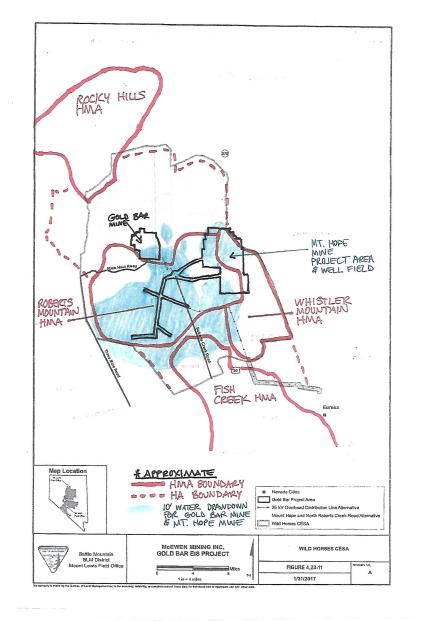
The DEIS is available online at HERE. Interested individuals should address all written comments to Christine Gabriel, Project Manager, using any of the following ways:
Fax: (775) 635-4034
Email: blm_nv_bmdo_mlfo_gold_bar_project_eis@blm.gov
Mail: Bureau of Land Management
Mount Lewis Field Office
50 Bastian Road
Battle Mountain, NV 89820
Wild Horse Freedom Federation and The Cloud Foundation submitted these joint comments regarding the BLM’s Gold Bar Mine Project:

February 7, 2017
animal cruelty, animal welfare, Animal Welfare, BLM corruption, Wild Horse & Burro Radio, Wild Horse & Burro Radio Adobe Town, animal cruelty, animal welfare, BLM, Bureau of Land Management, Carol Walker, horses, Radio Collar Study, wild Horse & Burro Radio, Wild Horse Freedom Federation, wild horses 4 Comments
February 3, 2017
animal cruelty, Animal Welfare, BLM corruption, Debbie Coffey, Wild horse slaughter animal cruelty, animal welfare, BLM, Bureau of Land Management, horses, Phil Jennings, Teterville, wild horses 6 Comments
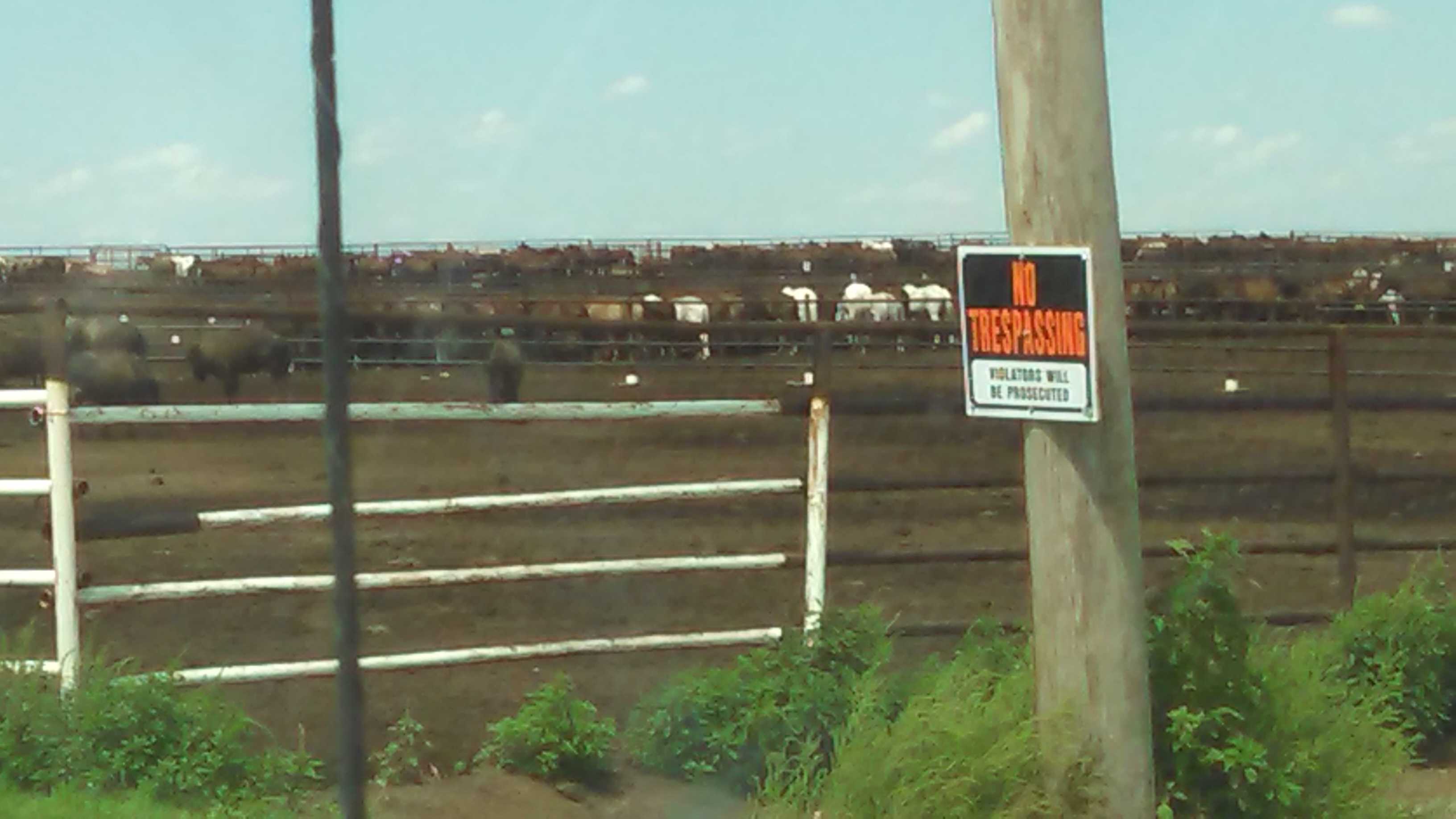 Wild horses next to bison at the Beef Belt Feedyard in Scott City, Kansas in 2014
By Debbie Coffey, V.P. and Dir. of Wild Horse Affairs, Wild Horse Freedom Federation
Copyright 2017 All Rights Reserved.
In the middle of June, 2014, the Bureau of Land Management (BLM) moved 1,493 wild horses from the Teterville Long Term Holding pastures in Oklahoma to the Beef Belt Feedyard in Scott City, Kansas. Over 13% of these wild horses died at this feedlot.
191 of the wild horses died in less than a year (7/7/14 – 6/30/15).
In a BLM “news” release dated 8/15/14 (over two years ago), the BLM announced that 57 wild horses had died at the BLM’s Scott City, Kansas “corral.” In this news release, the BLM stated that it had “launched an investigation” into the cause of deaths, and promised that “Once the investigation is concluded, the team will complete a report that will be made publicly available.”
To date, over two years later, the BLM has not made any report available to the public about the Scott City feedlot deaths.
Wild Horse Freedom Federation (WHFF) filed a Freedom of Information Act (FOIA) request, and found out that 196 horses died at the Scott City feedlot from 6/17/14 – 8/2/16.
87 of the 196 wild horses were euthanized. More
November 1, 2016
Uncategorized, Wild Horse & Burro Radio, Wild Horse & Burro Radio BLM, Craid Downer, The Wild Horse Conspiracy, Wild Burros, wild Horse & Burro Radio, Wild Horse Freedom Federation, wild horses 3 Comments
October 26, 2016
Uncategorized, Wild Horse & Burro Radio BLM, Bruce Wagman, Front Range Equine Rescue, Hilary Wood, horses, Schiff Hardin, Wild Burros, wild Horse & Burro Radio, Wild Horse Freedom Federation, wild horses 2 Comments
September 7, 2016
Uncategorized, Wild Horse & Burro Radio BLM, Carol Walker, ROck SPrings Grazing Association, wild Horse & Burro Radio, Wild Horse Freedom Federation, wild horses, Wyoming 4 Comments
August 17, 2016
BLM corruption, Uncategorized, Wild Horse & Burro Radio, Wild Horse & Burro Radio BLM, Bonnie Kohleriter, Carla Bowers, Wild Burros, wild Horse & Burro Radio, Wild Horse Freedom Federation, wild horses 9 Comments
August 2, 2016
BLM corruption, Wild Horse & Burro Radio, Wild Horse & Burro Radio Arizona, BLM, Marjorie Farabee, Mojave County Board of Supervisors, Wild Burros, wild Horse & Burro Radio, Wild Horse Freedom Federation 10 Comments

Join us on Wild Horse Wednesdays®, Aug. 3, 2016
5:00 pm PST … 6:00 pm MST … 7:00 pm CST … 8:00 pm EST
You can also listen to the show on your phone by calling (917) 388-4520.
You can call in with questions during the 2nd half hour, by dialing (917) 388-4520, then pressing 1.
This show will be archived so you can listen to it anytime.
________________________________________
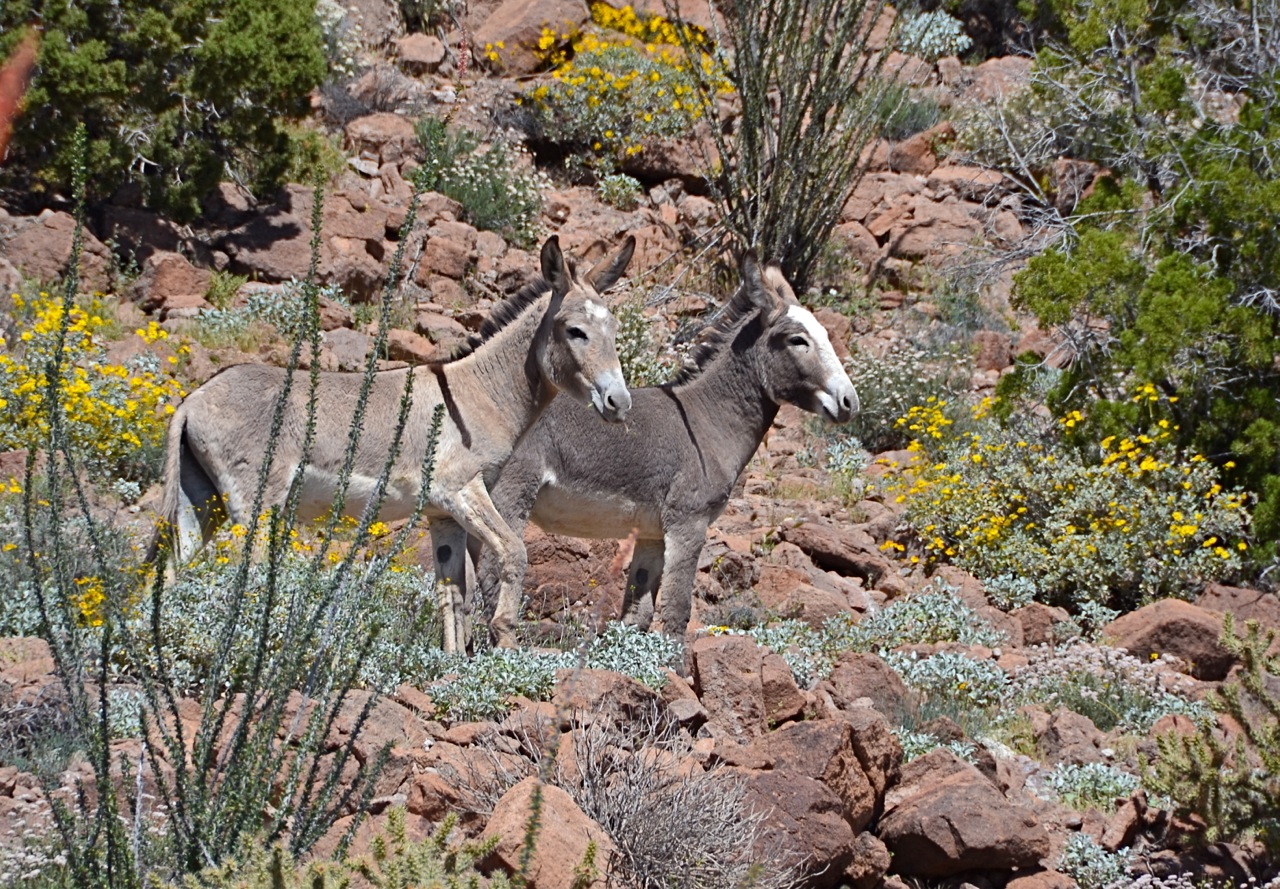
Tonight’s show will be hosted by Marjorie Farabee, Dir. of Wild Burro Affairs for Wild Horse Freedom Federation, Equine Mgr. of Todd Mission Ranch (TMR Rescue) & founder of Wild Burro Protection League.
Wild burros are in real trouble. In January of this year, Mojave County Supervisor Steve Moss called for issuing hunting licenses to shoot wild burros in Arizona. His claims were that the burros were overpopulated based on aerial count done by the BLM. But, is this true? Are they overpopulated? We know the numbers are vastly inflated. We know the burros are not genetically healthy due to the fragmentation of their habitat. We know that their ranges are severely over-grazed. But, who is doing the damage? And, what are the guidelines the BLM should be following according to law? Why do BLM employees routinely ignore the grazing guidelines they are supposed to uphold?
Listen tonight and find out.
To contact us: ppj1@hush.com, or call 320-281-0585 More


tsrad1@outlook.com
 [paypal-donation]


Whistleblower Summit for Civil and Human Rights


Finally! News you can use for seniors!


 The PPJ Gazette